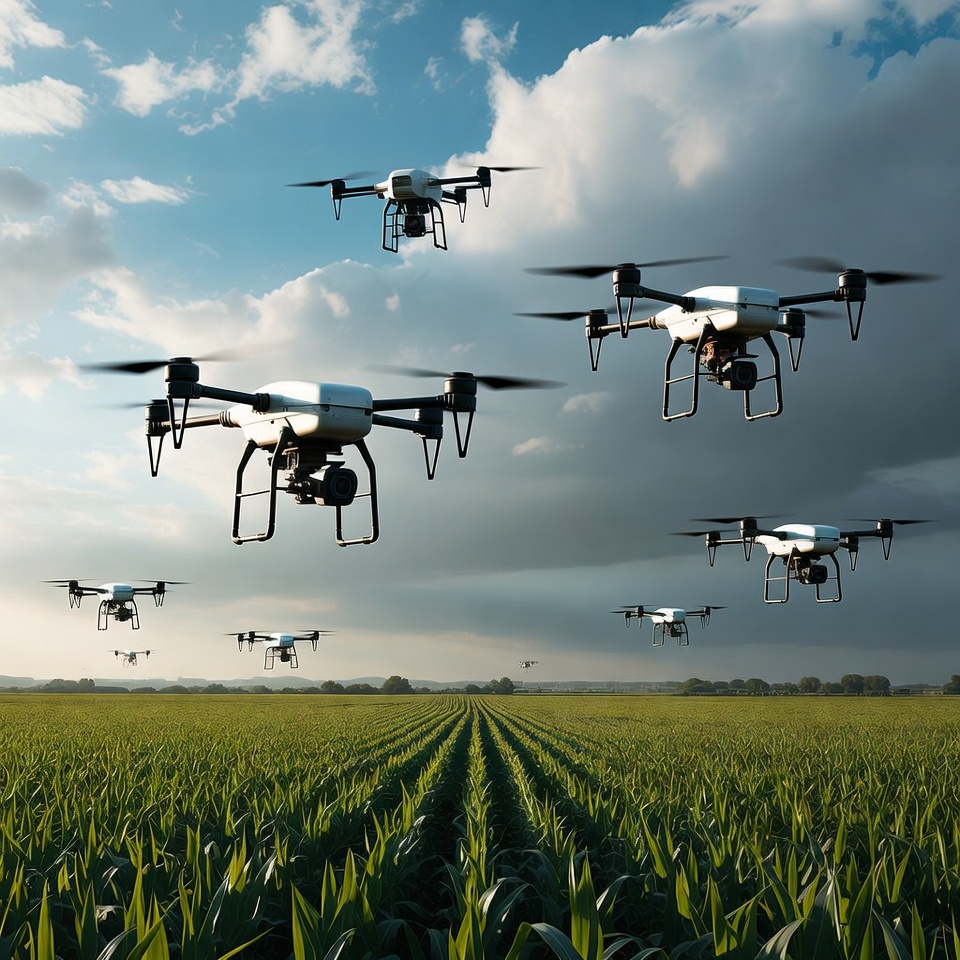
A look at the industries that define our state — and why artificial intelligence puts them squarely in the crosshairs.
Every state in America will feel the impact of artificial intelligence. But not every state is equally exposed. Iowa’s economy is built on industries that, by their very nature, are among the most vulnerable to AI-driven disruption. That’s not an opinion — it’s a function of what we make, what we grow, and what we do for a living here.
This isn’t a piece about robots taking over. It’s about something more nuanced and, in some ways, more urgent: a profound shift in how work gets done, who gets paid to do it, and what skills will matter in the years ahead. Iowa deserves an honest conversation about that shift — and it’s not happening loudly enough.
Let’s take a look at the industries that define our state.
Agriculture: It’s Not Just the Farmer
Iowa is the nation’s leading producer of corn, soybeans, and pork. Agriculture isn’t just our heritage — it’s a massive economic engine. And yes, AI is transforming the farm itself: autonomous tractors, AI-powered crop monitoring, precision irrigation systems that respond to real-time data. Iowa farmers are already navigating these tools, and many are adapting.
But the bigger exposure isn’t on the farm. It’s in the enormous support economy that surrounds it.
Commodity trading, crop insurance underwriting, agricultural lending, supply chain logistics, grain elevator operations — these are all information-intensive businesses where AI excels. The people who analyze yield data, price risk, move product, and process claims are facing significant automation pressure. Iowa has the highest concentration of agricultural engineers of any state in the nation. That expertise is valuable — but the administrative and analytical layers beneath it are not immune.
Insurance: Des Moines Is Ground Zero
Iowa is home to approximately 7,000 finance and insurance companies and nearly 95,000 industry workers. Des Moines has long been called the insurance capital of the United States, home to Principal Financial, Nationwide, Farm Bureau, and dozens of other major carriers and their vast workforces.
This is where the data gets stark. AI has already reduced standard underwriting decision times from three to five days to roughly 12 minutes — with higher accuracy than human reviewers. One major carrier’s AI system for claims processing reduced resolution time by 80 percent. At Lemonade, 55 percent of all claims are now fully automated from start to finish.
These aren’t predictions. They’re current numbers.
The jobs most immediately affected are entry-level claims processing, policy administration, data entry, and routine customer service — exactly the roles where tens of thousands of Iowans have built careers and where young workers have traditionally entered the industry. The career ladder is compressing. The question isn’t whether this will affect Des Moines. It’s how quickly, and whether the workforce is being prepared.
Manufacturing and Food Processing: The State’s Largest Sector
Manufacturing accounts for 16.5 percent of Iowa’s gross state product — ranking us fourth in the nation by that measure. Much of that manufacturing is food processing: meat packing, grain milling, dairy, and related industries employing tens of thousands of Iowans, many of them in smaller cities and rural communities that have few alternative employers.
This is exactly the kind of work — repetitive, process-driven, quality-controlled — that AI and robotics are designed to automate. The technology isn’t hypothetical. Automated processing lines, AI-powered quality inspection, robotic packaging systems — these are being deployed right now, in facilities like the ones operating across Iowa.
The economic geography here matters. When a plant in Sioux City or Ottumwa automates a significant portion of its line, those workers don’t have a tech sector to absorb them. The impact is concentrated and community-wide in a way it simply isn’t in more economically diversified states.
Healthcare: Strained and Under Pressure
Iowa’s rural healthcare system was already under significant strain before AI entered the picture. Hospital closures, provider shortages, and an aging population have created a fragile system in much of the state. AI offers genuine promise here — better diagnostic tools, remote monitoring, administrative efficiency. Some of that is genuinely good news.
But AI is also moving into radiology interpretation, clinical documentation, lab analysis, and the administrative functions that employ a large share of healthcare workers. As with insurance, the entry-level and administrative positions are the first to feel pressure. In rural communities where the hospital or clinic is often among the largest employers, that pressure has consequences that go well beyond healthcare itself.
Why Iowa Is Different
Compare this profile to Texas, where the technology sector, energy industry, and massive population growth provide significant economic buffers. Or Florida, where tourism, real estate, and a diverse service economy offer more resilience. Iowa’s economy is heavily concentrated in sectors that share a common characteristic: they are built on information processing, repetitive physical tasks, and large administrative workforces. Those are precisely the things AI does best.
That doesn’t mean Iowa is helpless. It means Iowa needs to be clear-eyed.
The states that navigate this transition well will be the ones that saw it coming, planned for it honestly, and invested early in workforce adaptation, policy frameworks, and economic diversification. The states that don’t will find themselves reacting rather than preparing — and the window for preparation is shorter than most people realize.
What Comes Next
This site exists because Iowans deserve better information about what’s happening — not filtered through a national lens, but focused on our industries, our communities, and our workforce.
In the weeks ahead, we’ll be going deeper on each of these sectors: how specific companies and communities are responding, what the research actually says about job displacement and creation, what Iowa’s universities and workforce programs are doing, and what our legislators are — and aren’t — paying attention to.
We’ll also be covering the fast-moving AI industry itself, because understanding the technology helps you understand the stakes.
The best way to stay informed is to sign up for the Iowa’s AI Future weekly newsletter. Every week, we pull together the most important Iowa-focused AI news, national research relevant to our economy, and the big-picture industry developments that matter for our state — curated, summarized, and delivered straight to your inbox. No hype. No jargon. Just the information you need to stay ahead of what’s coming.
Sign up here — it’s free, and it may be the most important five minutes of your week.
Iowa’s AI Future covers artificial intelligence’s impact on Iowa’s economy, workforce, and communities. Have a tip, a story, or a perspective to share? Get in touch.
Sources:
Sources: